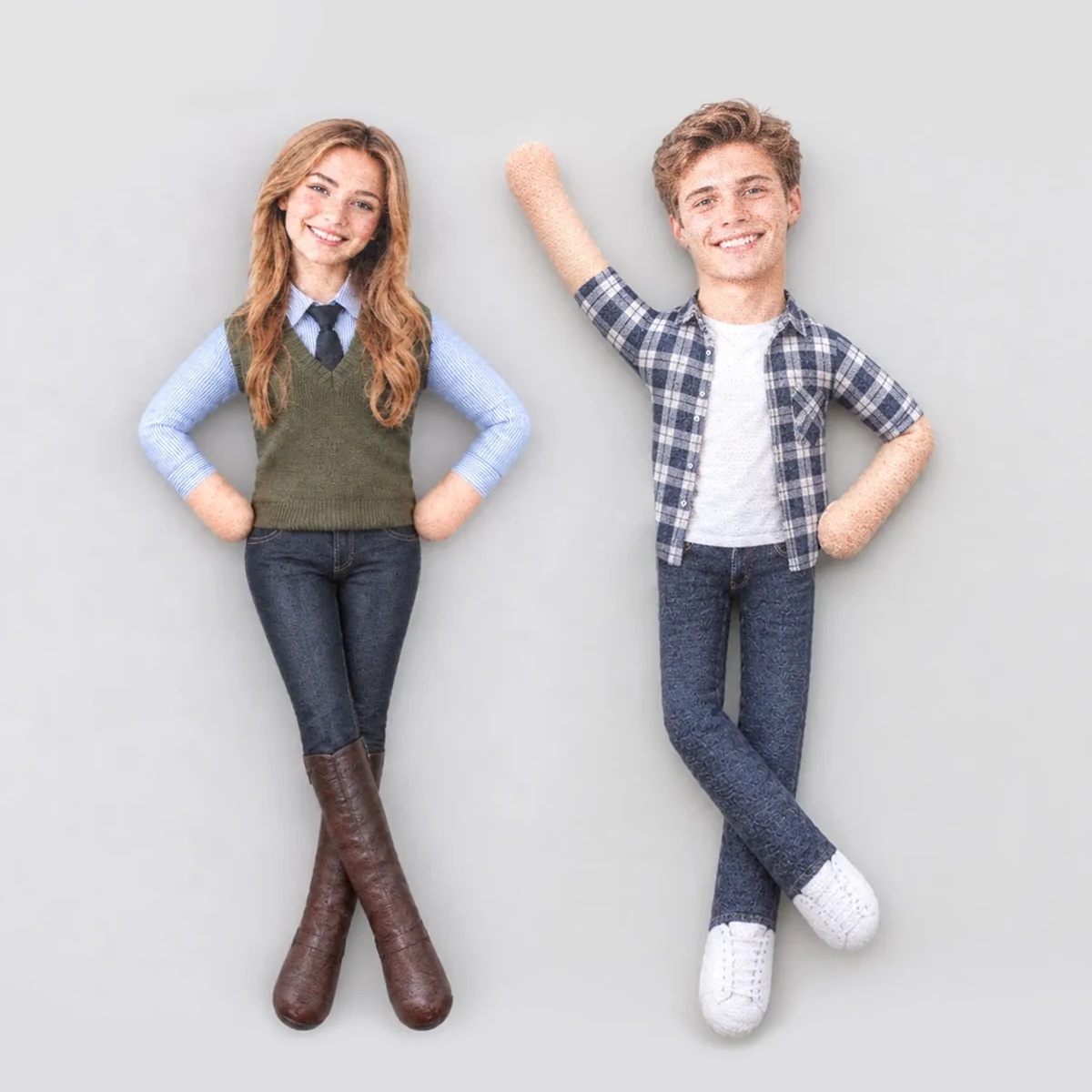
The most useful custom brief is specific and selective. Start with the details someone would mention when describing the person: a fringe, curls, glasses, a smile or a jacket they wear everywhere. Pick a few features that carry the likeness, rather than expecting every visible detail to receive equal emphasis. Keep your chosen doll style in mind because fabric, a printed photograph and a collectible face express detail differently.
Describe hair with a colour, length and shape. “Dark brown, chin length, with a left-side part” is easier to interpret than “same hair”. Give eye colour and skin tone in your own words, and identify which reference photograph is the closest guide under natural light. Cameras, screens and fabrics can reproduce colour differently, so use the proof discussion to resolve any important colour concern.
For clothing, state the garment, main colours and two defining details. A striped blue jumper with a white collar is a clearer instruction than “casual clothes”. Explain whether the outfit in the picture is essential or simply an example. Mention glasses, a hat or a small accessory separately and ask whether it can be included. Do not assume loose accessories, branded logos, embroidered text or particular construction methods are part of the quote.
Add the preferred size and quantity, but treat them as requests until confirmed. If this is a group, explain which details should match and which belong to each person. Finish with a short priority list and any acceptable simplifications. A precise brief makes it easier to compare the design proof against your original wishes. When a detail changes later, record the change in the private request conversation so the latest instructions remain clear.